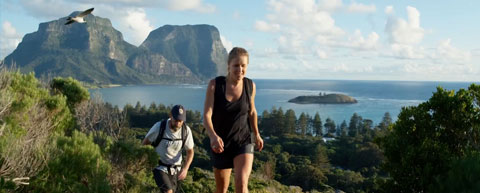
Great Walks of Australia: Nature and Wildlife You’ll Never Forget
Categories: Inspiration, News
There’s something quietly compelling about the idea of walking for days through the wild heart of Australia. For many, it starts as a daydream: a longing for open skies, the crunch of earth beneath your boots, and the gentle company of native animals living in landscapes that feel both ancient and timeless. If you find your thoughts drifting to places where the horizon stretches wide and the songs of birds fill the air, the Great Walks of Australia extend an invitation: let your mind wander further and imagine where your feet could take you.
These walks aren’t measured by distance alone. Each step brings a slow-building sense of wonder, simple joys, and sensory surprises. A glimpse of a kangaroo in the morning mist, the call of a distant kookaburra, or the changing palette of bush greens, ochres, and blues. It isn’t just the scenery that’s memorable – it’s how these places make you feel: connected, calm, present, and quietly excited by what the next bend in the trail might reveal.
Summary
- Walk through Australia’s most remarkable landscapes: from wild coasts to red outback and lush rainforests
- Experience real, unscripted wildlife encounters – kangaroos, echidnas, emus, wallabies, and abundant birdlife
- Find connection: with nature, with fellow walkers, and with yourself
- Each walk reveals unique landscapes and gentle, memorable moments
- Let yourself start dreaming about your next adventure
Why Walking Feels Different Here
On a Great Walk of Australia journey – it’s never rushed. These multi-day walks are designed for those who want to fully experience each landscape, with time to notice the scent of the bush, the patterns of sunlight on water, and the company of the wildlife that shares these ancient places. Whether you’re tracing the coastline of Tasmania’s Bay of Fires, following the ochre ridgelines of the Flinders Ranges on the Arkaba Walk, or taking in the open skies along Western Australia’s Cape to Cape Track, the pace allows you to really see, hear, and feel the world around you.
Every walk is a sensory experience. The sea air, salty and fresh, drifts in over white sand as you move between beach and forest. In the early hours, the bush is alive with the sounds of birds waking, and the light shifts from soft pink to the clear blue of day. The land has its own rhythm – and walking is the best way to match it.
Wildlife Encounters: Real Moments in Nature
One of the unspoken delights of walking in Australia’s wild places is the genuine, unscripted encounters with animals that can’t be found anywhere else or promised (nature makes up it’s own rules). Hence these moments are un-orchestrated – they happen at the gentle, unforced pace of nature.
Kangaroos are often a calming presence, grazing quietly at dawn or dusk, ears flicking at your approach, just far enough away to remain unbothered. On forest and heathland tracks, wallabies appear almost by surprise, alert but never hurried as they pause and watch you from the shadows.
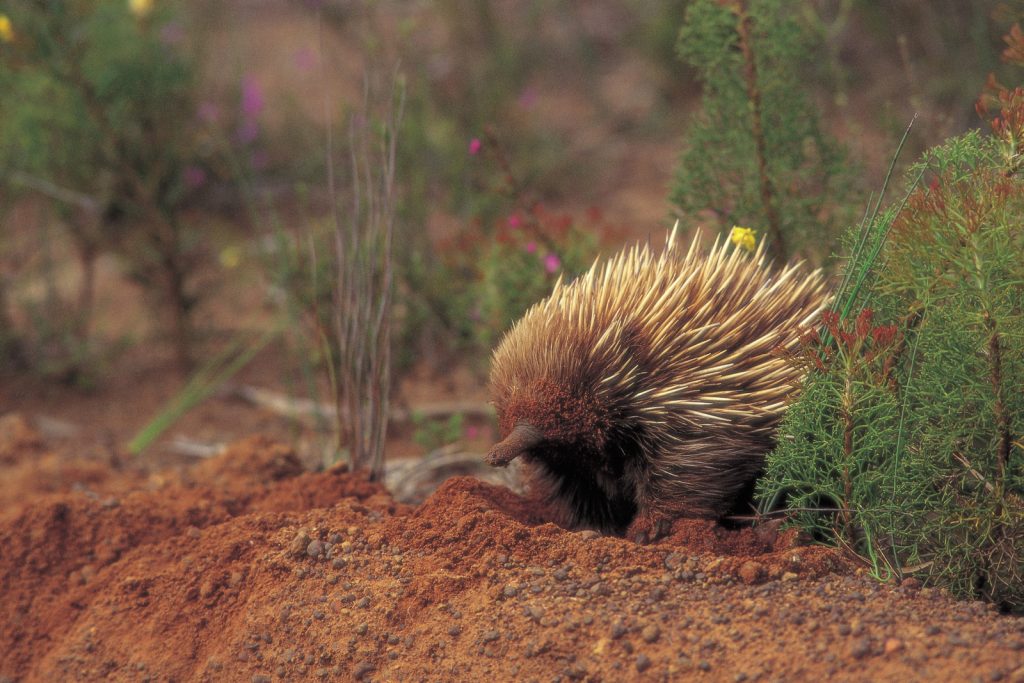
Moving slowly, you might spot a solitary echidna shuffling through the undergrowth, nose twitching, its spines catching the first glint of sun. The experience is subtle and grounding – there’s a quiet happiness in sharing a path, however briefly, with such a unique creature.
Birdlife is everywhere, its music shaping the mood of the day. Early mornings are a chorus of magpies, kookaburras, and the flash of parrots between branches. In more open country and grasslands, on the Murrary River Walk or on The Arkaba walk, you may encounter emus with their tall, almost prehistoric presence, watching you with cautious curiosity before they stride off with remarkable grace.
Along coastal stretches like the Twelve Apostles Signature Walk, Flinders Island Walking Adventure in Comfort or the Bay of Fires Signature Walk, the wildlife story continues. Lookouts might reveal fur seals basking on rocks just offshore, the sharp scent of salt in the air. If you stand quietly, you may see dolphins play in the surf below, weaving through the waves with easy joy. A spontaneous, unforgettable moment that stays with you long after your boots are off.
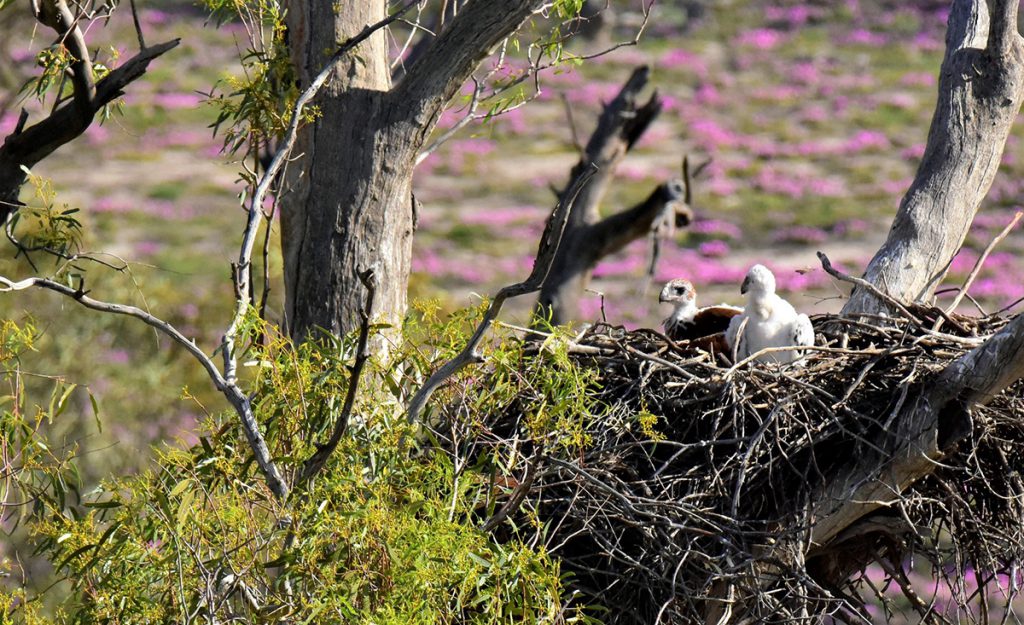
Travelling on foot brings you into a world that is very much alive. A wedge-tailed eagle circling high above a ridge, the rustle of a goanna disappearing into dry leaves, tiny animal tracks pressed into damp earth after rain—these observations become your memories. Each encounter, whether fleeting or extended, connects you more deeply to the land and its stories.
Landscapes That Leave a Mark
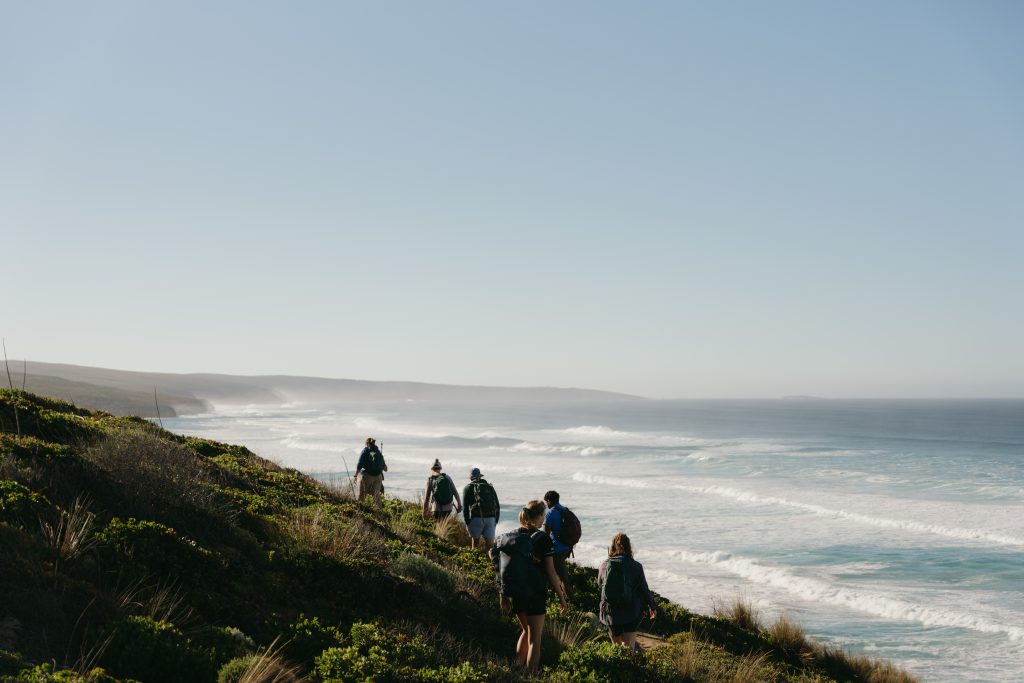
Every Great Walk tells its own story through the land itself. The rugged sandstone ridges and gorges of the Classic Larapinta Trek in Comfort in the Northern Territory glow warm and red under the desert sun. Tasmania’s Cradle Mountain Signature Walk offers peaks, valleys, forest and lakes, where every step feels like discovering heaven. On Western Australia’s Cape to Cape Walk, you’ll walk cliff tops swept by wind, with wildflowers bright at your feet and the endless Indian Ocean as your horizon.
There’s a quiet power in moving through landscapes this varied with soaring cliffs, shaded gullies, wildflower-dotted heath, or silent, ancient forest. It’s not just the views that linger; it’s the way these places make you feel. The hush of solitude, the camaraderie of walking with others, the deep satisfaction of reaching a quiet lookout—these are moments that shape not just a trip, but your relationship with nature itself.
Walking for Wellbeing: More Than a Physical Journey
For many, these journeys become something deeply personal. Walking gives you time to put aside distraction, to listen, to reflect, to feel a sense of belonging in the natural world. The research is clear: time outdoors can calm the mind, ease stress, and foster a profound sense of wonder and gratitude. Australia’s wild walks offer the perfect setting for this kind of renewal – where every day brings new discoveries, gentle challenge, and the kind of quiet joy that’s hard to find anywhere else.
How to Start Dreaming About Your Own Walk
If the thought of waking up to the sound of birds, following a winding trail through wild country, and meeting wildlife along the way stirs your curiosity, now is the perfect time to let those dreams grow. Great Walks of Australia offer routes for many fitness levels, with small guided groups, comfortable eco-stays, and expert guides who bring the landscape alive with stories and knowledge.
Whether you picture yourself beside turquoise coves, among towering forest, or gazing over ancient ranges, there is a walk waiting to welcome you. Take time to let your imagination roam, and see where your own path might lead.
Start dreaming about your next adventure. Download the Great Walks of Australia brochure here.
FAQs
Which Great Walk is best for first-timers?
Depending on fitness levels many first-timers walkers looking for easy to moderate walking experience are drawn to Maria Island Walk in Tasmania or choose the Murray River Walk in South Australia. Both known for their accessible terrain, stunning scenery, and friendly guided experiences for those starting multi-day walking for the first time.
When is the best time to do a Great Walk in Australia?
Spring and autumn tend to be very comfortable seasons, with cooler temperatures and wildflowers in bloom, though each walk and region has its own ideal window to explore. With walk spanning the country and operating at various times of year, there is definitely a walk and climate to suit. The Great Walks of Australia brochure has a 2 page calendar per month with operating walks. Contact eo@greatwalksofaustralia.com.au for a copy of the planning guide and walks calendar.
Do I need to be an experienced hiker?
Most Great Walks are designed for people with a moderate level of fitness. Guided journeys provide support, comfortable camps or lodges, and experienced guides to help you get the most from each day. For more challenging hikes, look at those on the Planning Guide, another helpful resource available that differentiates between moderately active, active and very active walks. Most walks average between 8-16km per day across 4 – 6 days of walking.
What wildlife might I see on these walks?
Depending on the region, you could spot kangaroos, wallabies, echidnas, emus, diverse birdlife, dolphins, seals, and more. Guides are skilled at helping you spot, observe and understand the wildlife you meet.
Are these walks suitable for solo travellers?
Yes. Many solo walkers find the small group environment welcoming and supportive, with shared discovery often leading to lasting friendships.