Eco-Friendly Multi-Day Hikes in Australia: Sustainable Travel with Great Walks of Australia
Categories: Guides, Sustainability
Quick answer
Great Walks of Australia offers eco-friendly multi-day hikes across the country. Every walk is guided, runs in a small group and follows a shared sustainability charter. In addition, every member holds Advanced Ecotourism Australia certification or higher, so you can walk some of Australia’s wildest places while looking after them.
- Certification: Advanced Ecotourism Australia at minimum, or a higher certification from a sustainability authority
- Group size: generally 6 to 16 walkers, with 8 to 12 on average
- Charter: 12 commitments covering land, wildlife, waste, energy, First Nations culture and local communities
- Accommodation: nearly all of it is off-grid, with rainwater, solar and gas power, and composting toilets
- Waste: leave no trace principles on every walk, and single-use plastics phased out or nearly phased out
- Conservation: several walks fund or support wildlife and land restoration
What to look for in eco-friendly multi-day hikes
Eco-friendly multi-day hikes should be able to show their credentials. Here are six things to look for, and how the Great Walks of Australia meet each one:
| What to look for | How the Great Walks of Australia meet it |
|---|---|
| Eco certification | Every member holds Advanced Ecotourism Australia certification at minimum, or a higher certification from a leading sustainability organisation |
| Small group sizes | Groups generally have 6 to 16 walkers, and the average is 8 to 12 |
| Leave no trace | Every walk follows leave no trace principles on the trails and at accommodation, and removes all rubbish |
| Local employment | The charter commits walks to direct employment, services, partnerships and local products in regional communities |
| Indigenous partnerships | The charter commits walks to respect traditional custodians and to work in partnership with them wherever possible |
| Conservation contributions | Several walks fund or support conservation work, such as the Flinders Ranges Arkaba Walk’s private conservancy |
The Great Walks of Australia sustainability charter
As a collective, our member walks have committed to a shared sustainability charter. It sets 12 commitments, which fall into six groups:
| Group | What the walks commit to |
|---|---|
| Land and wildlife | Respect the land, stay on designated trails, and avoid physical contact with animals in their wild habitat |
| Leave no trace | Follow leave no trace principles on the trails and minimise disturbance at accommodation sites |
| First Nations culture | Respect traditional custodians, work in partnership with them wherever possible and educate guests about the culture |
| Local communities | Support regional communities through direct employment, services, partnerships and local products |
| Energy and waste | Minimise waste, aim to eliminate single-use plastics, and use low-impact renewable energy and off-grid technology |
| Standards and partners | Hold at least Advanced Ecotourism Australia accreditation, employ guides who share the ethos, and work with national park authorities and conservation groups |
Eco-certified, expert-guided walks
Every Great Walk of Australia member is either Advanced Ecotourism Australia certified at minimum or holds a higher certification from a leading sustainability organisation. In practice, this means each of the eco-friendly multi-day hikes meets strict environmental standards, from minimising water waste to giving back to local communities. Moreover, some members go well beyond the minimum.
Guides are incredibly important. Because our walks run in small groups, passionate and experienced guides can share the area’s plants, wildlife, geology and history, and guests leave with a strong sense of custodianship for these wild places. As well they are integral for the safety, confidence and comfort of our walkers.
Low-impact accommodation on eco-friendly multi-day hikes
Our accommodation ranges from safari-style tents to eco-lodges, and all of it is designed to disturb the environment as little as possible. Nearly all of it is off-grid in remote areas, so most walks typically use:
- rainwater harvesting systems
- solar and gas power
- water-free composting toilets
- biodegradable soaps
- manual rubbish removal
For example, the camps on the Classic Larapinta Trek in Comfort are dismantled and removed when they are not in use, so the land can recover during the off-season. They also use low-water showers, composting toilets, solar lighting and sustainably sourced firewood.
Leave no trace and waste
Because the walks are remote, often everything we bring in comes out again. Any rubbish the group produces is removed from the site, and guides often collect stray litter on public tracks as well. Therefore, our walks are experts at rubbish minimisation.
Single-use plastics have been phased out, or nearly phased out, on every Great Walk. Stainless-steel drink bottles and reusable lunch containers are encouraged and used on many walks. In addition, the team on The Maria Island Walk generates less than one bag of rubbish over the four-day walk, even with up to 12 guests, by sorting recyclables and composting organic waste.
Conservation in action
Many eco-friendly multi-day hikes do more than protect the places they pass through. Instead, they fund conservation work directly, so choosing these walks supports it.
| Walk | What it contributes |
|---|---|
| Flinders Ranges Arkaba Walk | Takes place on a 63,000-acre former sheep station that is now a private nature conservancy, where feral fox, cat and goat control has helped native species return, including the endangered yellow-footed rock-wallaby. Tourism funds almost all of this work. |
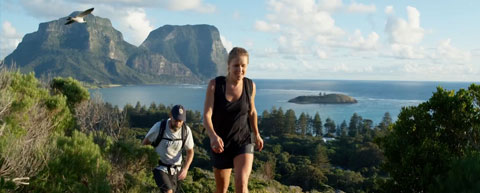
| Seven Peaks Walk | Restores the last critically endangered patch of Sallywood swamp forest on Lord Howe Island, with more than 6,000 trees and palms planted so far |
| Kangaroo Island Signature Walk | Funds removal of invasive Tasmanian blue gums that spread after the 2020 bushfires, helping native plants regenerate, in partnership with Conservation Volunteers Australia. |
| Scenic Rim Trail | More than 67% of the operator’s property holdings are preserved as nature refuges, including a 4,500-hectare refuge that is home to koalas and threatened birds |
| Cradle Mountain Signature Walk | Supports a seed conservation partnership, and guests can book dedicated seed collection walks on the Overland Track |
| Murray River Walk | Builds “fish hotels” with the charity OzFish to put fallen logs back into the river, helping the vulnerable Murray cod recover. |
| The Maria Island Walk | Helps maintain the historic Bernacchi House in the World Heritage-listed Darlington precinct |
Respecting First Nations culture
Our charter commits every walk to respect traditional custodians and, wherever possible, work in partnership with them. For example, the Classic Larapinta Trek in Comfort partners with the Arrernte traditional owners of the West MacDonnell Ranges, and on every walk an elder escorts the group into Standley Chasm to explain its food, medicinal herbs and spiritual significance.
Local people and local food
Our eco-friendly multi-day hikes support regional communities through jobs, services and suppliers. Meanwhile, good food is part of every walk, and our members source locally wherever they can. The Murray River Walk, for instance, serves regional and native ingredients, and the Scenic Rim Trail grow some produce on site to cut food miles.
Carbon neutral and carbon offset walks
Several member operators are 100% carbon neutral businesses. In addition, the Classic Larapinta Trek in Comfort is fully carbon offset through renewable energy and reforestation projects. On the Cape to Cape Walk, some emissions are offset through reforestation plantings on the Cape to Cape Track, and guests on every trip can make a voluntary offset for their own travel.
How to walk lightly on a Great Walk
You do not need to do much to reduce your impact, because the walks are designed around it. However, a few habits help:
- Follow your guide and stay on the designated trail
- Use reusable bottles and containers, as the walks do
- Avoid contact with wildlife
- Take your rubbish with you, as the walk does
Read more in our sustainability story, or meet the guides who share this ethos.
How to book eco-friendly multi-day hikes
First, choose a walk and check dates on the walk departures page. Then follow the link on the walk page to book with the walk operator. If you have questions, our FAQs explain what to expect.
Eco-friendly multi-day hikes FAQs
Yes. Great Walks of Australia is a collective of guided multi-day walks run by local operators, and every member holds Advanced Ecotourism Australia certification at minimum or a higher certification from a reputable sustainability authority.
Every Great Walk of Australia follows a shared charter of 12 sustainability commitments. They cover leave no trace, low-impact accommodation, renewable energy, waste reduction, First Nations culture and local communities.
Yes. Every member is either Advanced Ecotourism Australia certified at minimum or holds a higher certification from a reputable sustainability authority.
It is a set of 12 commitments that every member walk has made. They cover respect for land and wildlife, leave no trace, First Nations culture, local communities, renewable energy and waste reduction, and working with park authorities.
Single-use plastics have been phased out, or nearly phased out, on every walk. Stainless-steel bottles and reusable lunch containers are used on all walks.
Walks keep to designated trails and avoid contact with animals. In addition, some walks fund conservation directly, such as the Flinders Ranges Arkaba Walk’s work to restore native species on its private conservancy.
Yes. Our charter commits every walk to respect traditional custodians and to work in partnership with them wherever possible. For example, the Classic Larapinta Trek in Comfort partners with the Arrernte traditional owners.
It ranges from safari tents to eco-lodges. Many are off-grid, with rainwater, solar and gas power, composting toilets and biodegradable soaps.
Groups generally have 6 to 16 walkers, and the average is 8 to 12. Walks typically have at least two walking guides.